

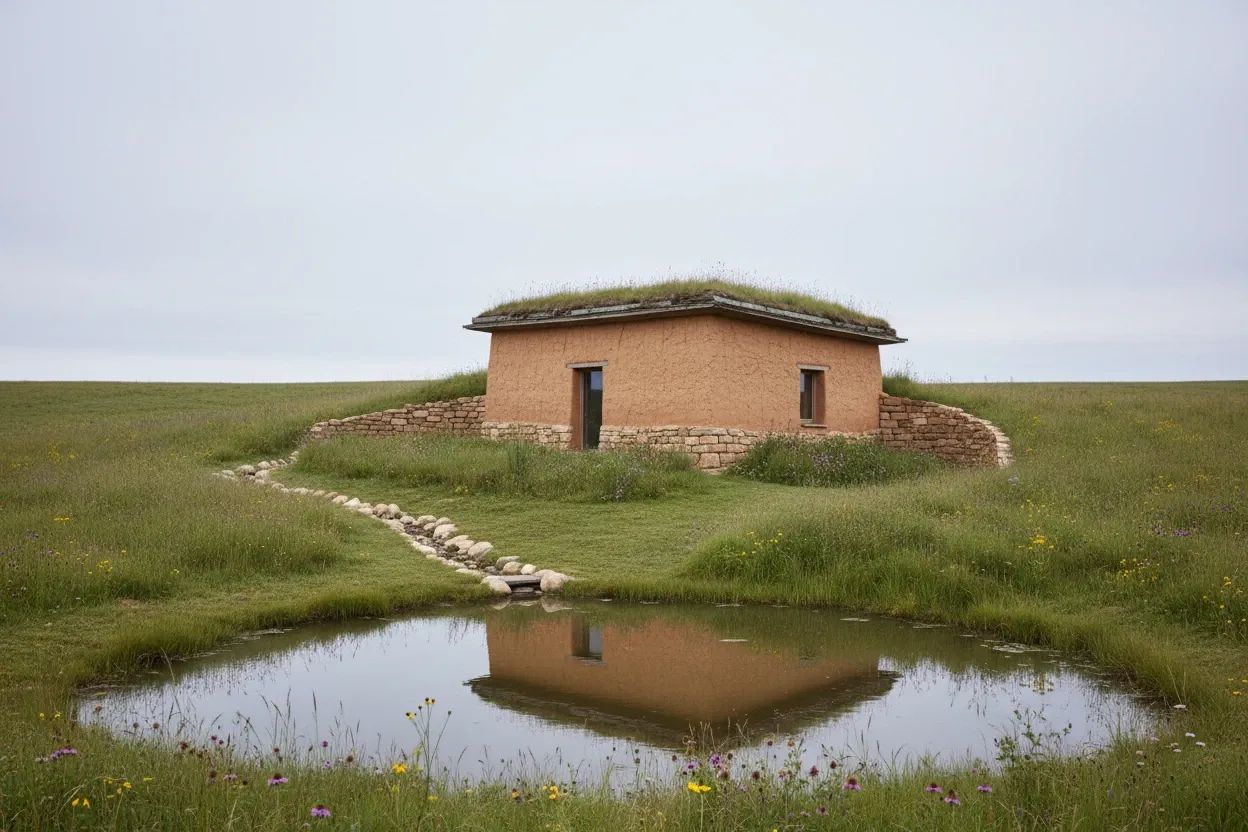
It's Time to Start Building With the Land Again
Somewhere along the way, we started acting like every piece of property should accommodate the same house. We clear the trees, flatten the lot, pour the foundation, and then spend the next 30 years fighting nature with bigger HVAC systems and higher utility bills.
What if we went back to designing homes that worked with the land instead of against it?
For centuries, homes were oriented to capture prevailing breezes, shield occupants from harsh afternoon sun, and take advantage of natural shade. Builders understood the site before they drew the floor plan. Today, we have incredible technology, yet we've often forgotten those basic principles. Research continues to show that climate-responsive design, natural ventilation, passive solar orientation, and locally appropriate materials can dramatically reduce energy demands while improving comfort.
Imagine walking onto a homesite and asking different questions. Where does the wind naturally flow? Which mature trees should be preserved instead of removed? Where can a deep roof overhangs shade windows in summer while allowing winter sunlight inside? How can porches, courtyards, or covered outdoor spaces become part of the home's cooling strategy instead of simply decorative features?
Material selection matters just as much. Stone, brick, wood, lime-based finishes, and regionally appropriate products have stood the test of time because they respond well to the climates where they're used. A beautiful home isn't just one that photographs well on listing day. It's one that still performs decades later with less maintenance and lower operating costs.
As REALTORS®, architects, planners, and builders, we should stop thinking of the land as something to conquer and start seeing it as our first design partner. The best homes don't ignore their surroundings. They belong there.
The future of housing may not come from inventing something entirely new. It may come from remembering the wisdom that guided generations before us and combining it with today's building science. Sometimes progress isn't about reinventing the wheel. It's about rediscovering why it worked so well in the first place.