

 LU
LU JB
JB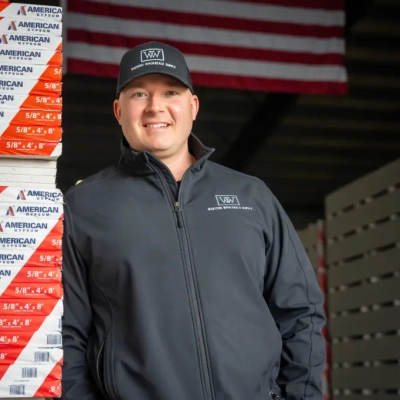 NW
NW CG
CG
Preserve Design Relationships Replace Forms
Jake WoodsLighting Consultant · Residence Supply
I'm Jake Woods, lighting and interior designer at Residence Supply in Coral Gables. Supply chain disruptions have become a regular part of project management at this point, and the substitution question — what you can swap and what you have to protect — is one I've had to work through more times than I'd like over the past few years.
The principle I use is straightforward: identify which materials are load-bearing to the design concept and which are supporting players. Not every specified item carries equal weight in terms of what the space is trying to do. Some things are there because they were the best available option at the time of spec. Others are there because the entire visual logic of the space depends on them. Those two categories require completely different responses when availability becomes a problem.
The substitution that worked best came on a residential project where a specific brushed brass fixture finish was on a 22-week backorder — effectively a project-stopping delay. The fixture itself was specified because the brass tone was tying together the hardware, plumbing fixtures, and stone veining throughout the space. The form of the fixture mattered less than the finish relationship it was part of.
Rather than waiting or swapping to a completely different fixture, I sourced an alternative form from a different manufacturer that could be finished to the same brass specification through a custom finishing house we work with. The lead time was eight weeks instead of twenty-two and the finish match was close enough that the material relationship the design depended on stayed intact.
The principle was simple — protect the relationship, not the object. Once I knew what the fixture was actually doing in the space, the substitution decision became obvious.
Protect Health Standards Choose Certified Alternatives
Lesley UptonManager Inventory Control · King of Floors
As the Inventory Control Manager at King of Floors, I've sourced flooring directly from global factories since 2010. When supply chain issues hit, my rule is to protect health, safety, and performance standards, while swapping out the specific material type if a high-quality alternative is immediately in stock.
For instance, when a client faced massive delays sourcing a specific traditional hardwood, we substituted it with Swiss Krono laminate flooring. This kept the project on schedule while perfectly replicating the natural wood aesthetic and high-traffic durability the client demanded.
The guiding principle was protecting the home's health standards. By choosing Swiss Krono, we maintained strict FloorScore certification and low-VOC standards without compromising the project's timeline.
Match Performance First for Rated Systems
Jake BeanPresident & Co-Owner · Western Wholesale Supply
Running a distribution business for Eastern Idaho and Western Wyoming contractors since 1963 gives you a front-row seat to every supply crunch that rolls through. When a material gets allocated or backordered, my first instinct is to ask: does this substitution change the performance envelope, or just the spec sheet?
The one thing I protect hardest is fire-rated assemblies. When a framing or drywall spec calls for a tested system, you can't casually swap components—the whole UL listing can unravel. I've seen contractors get burned mid-project trying to save time there.
A substitution that actually worked well for us: a commercial job needed a specific CertainTeed acoustical tile that was on extended lead time. We swapped to a comparable Rockfon product—same NRC rating, same grid compatibility, no re-engineering required. The principle that guided it was matching the performance spec first, the manufacturer second. The GC cared about sound control and ceiling system integrity, not the logo on the tile.
The practical question I ask before any swap is: who bears the risk if this performs differently? If the answer is the building owner or the GC's warranty, that's where you slow down and document everything in writing before proceeding.
Prioritize Function Over Finish
Neil WebsterCEO · Mills Shelving
The principle we follow is to protect performance before appearance. If a substitution affects durability, safety, load capacity, or long-term functionality, we avoid compromising on those areas.
During a period of supply chain disruption, we worked with clients who needed shelving projects completed on tight timelines. In some cases, we substituted finishes or non-critical accessories while maintaining the same structural shelving system. The result was that stores opened on schedule without sacrificing reliability or future expandability.
A good substitution solves the supply problem without creating a performance problem later.
Honor Requirements Change Products
Craig GardenCEO & Senior Project Manager · NRG Consulting & Contracting
At NRG I deal with this most often in commercial, industrial, food-grade, healthcare, and GMP-type spaces, where a "simple swap" can create compliance or maintenance problems later. I protect code, safety, cleanability, ventilation, humidity control, equipment clearances, and anything buried behind walls or tied to inspections.
My quick test is: does the substitute change performance, approval path, warranty, cleaning protocol, or commissioning? If yes, it is not a purchasing decision anymore; it becomes a design and risk decision that needs documentation.
One substitution that worked was on a GMP-style facility where a specified interior wall finish had lead-time issues. We moved to an alternate hygienic wall panel system, but only after confirming cleanability, fire rating, sealant compatibility, and detailing at penetrations.
The principle was: swap the product, not the requirement. I'm flexible on manufacturer or assembly path, but I don't trade away the reason the material was specified in the first place.